
archive-object-reference
REFERENCE : MTM.2016.0140.0447
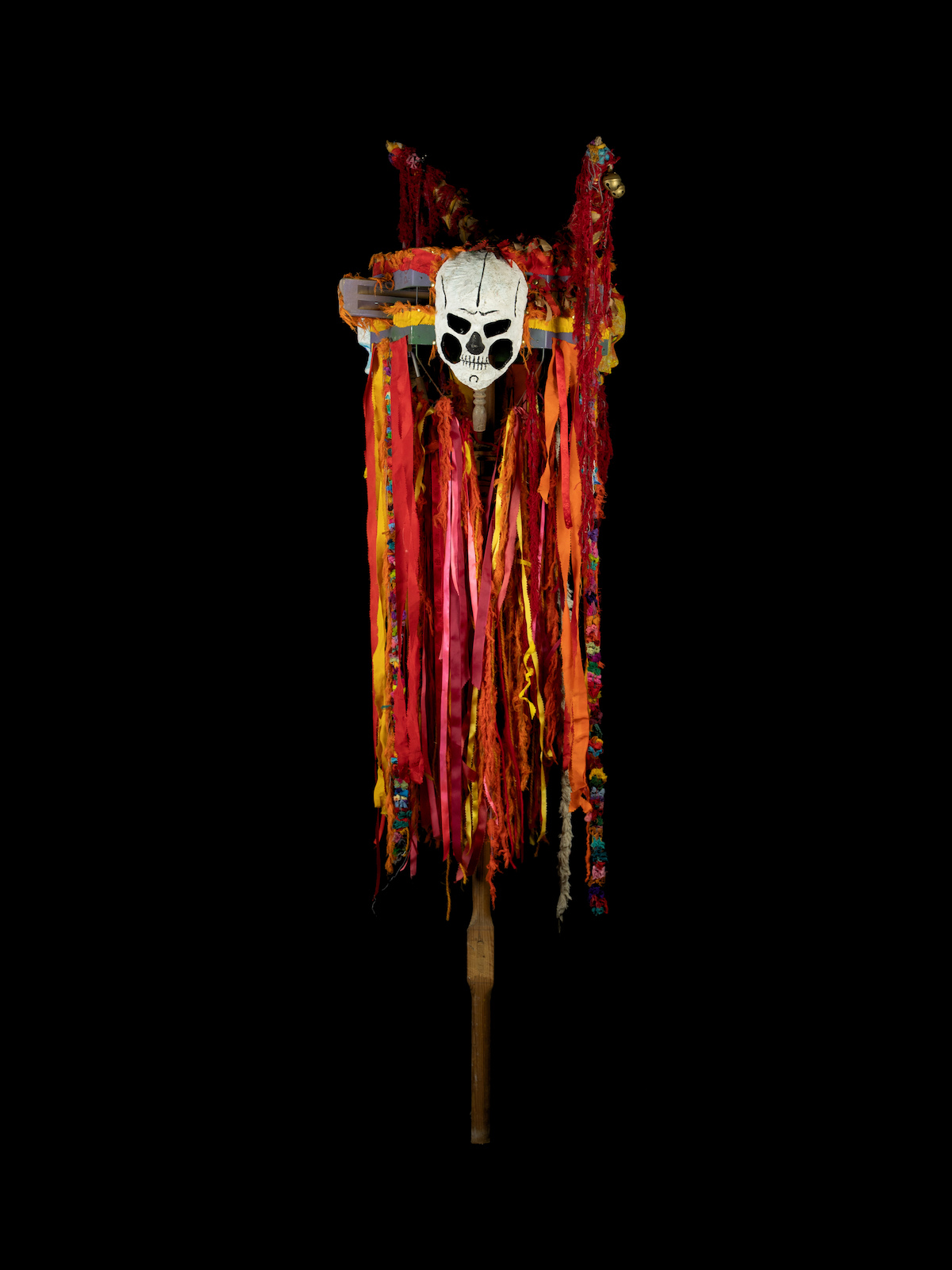
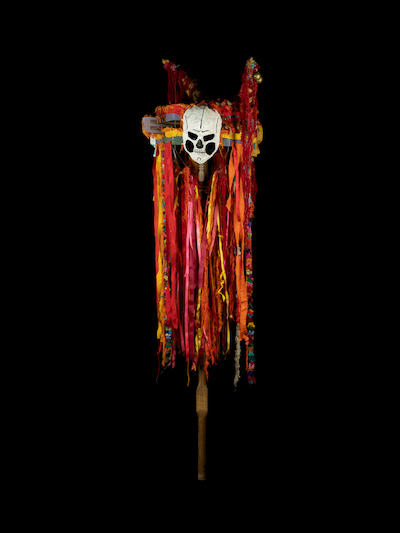
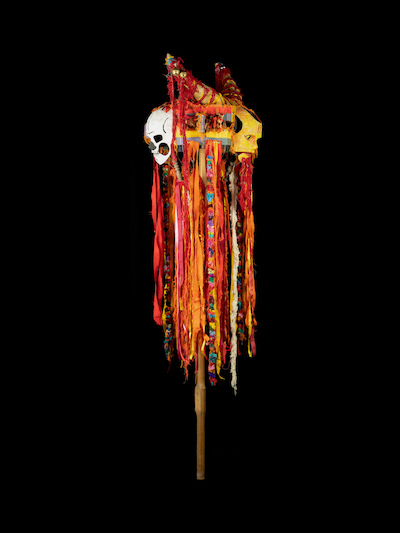

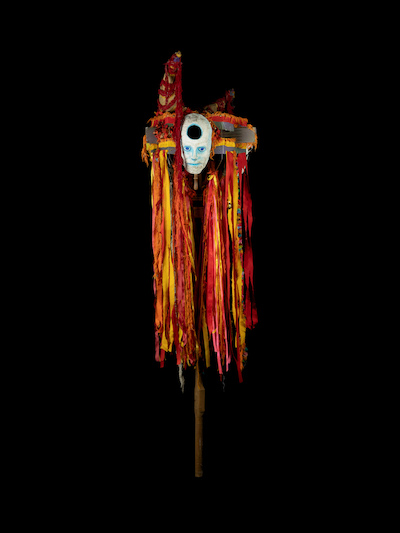


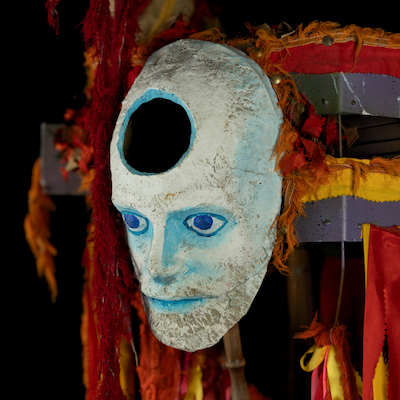


- OBJECT_HEIGHT : 1970 mm ( 6'5" in )
- OBJECT_WIDTH : 730 mm ( 2'4" in )
- OBJECT_LENGTH : 550 mm ( 1'9" in )
- OBJECT_WEIGHT : 4100 g ( 9.04 lb )
- OBJECT_REF : MTM.2016.0140.0447
- OBJECT_NAME_EN : Devil-Angel-Death
- EVENT_NAME_EN : COMPLAIN
- OBJECT_TYPOLOGY_EN : puppet / indirect manipulation / marotte
- OBJECT_DATE : 2016
- OBJECT_STORAGE_REF :
OBJECT_MATERIAL_EN :
skeleton | wood, expanded PVChead | paper dough
details | brass rattles
painting | acrylic paint
costume | various fabrics
OBJECT_ARTISTS_EN :
- direction | Clara Ribeiro
- art direction | enVide neFelibata
- drawing | enVide neFelibata
- creation | Migvel Tepes
- built support | enVide neFelibata
OBJECT_DESCRIPTION_EN :
This character had to be structured in a different dimension, an instrument character, a popular figure, different identities in one.
We started with a thick rod with a rattle, widely used in Easter ceremonies, especially in the north of the country, particularly in Braga during the traditional religious parades. Its deafening noise creates a change and so three figures were created that, in this rotation and screeching of the rattle, follow one another. Identities that are presented here in the form of masks, all part of one: Devil, Angel and Death.
In this rotation, the costume designer has inserted a set of fabric ribbons in garish tones, reminiscent of the popular Portuguese festive universe.
The manipulation of this piece is thus done through the rotation and stopping of the figures, allowing the speech of the figure facing the audience or facing another puppet on stage. This creates a visual, sound, and identity game that converges towards a single meaning, of a popular relationship impregnated with religious beliefs, accentuating the intimidating character it takes on during the show.
OBJECT_CONTEXT_EN :
Performed in 1733, “The Life of the Great Don Quixote de la Mancha and the Fat Sancho Panza” was António José da Silva's first play, “The Jew”. An ironic interpretation of the play criticizes justice and the “walls” that Europe erects.
DOWNLOAD :
CONDITION REPORT 3.3 MBIMAGERY ARCHIVE 52.5 MB
MODULAE 204.9 KB