
archive-object-reference
REFERENCE : MTM.2018.0156.0302
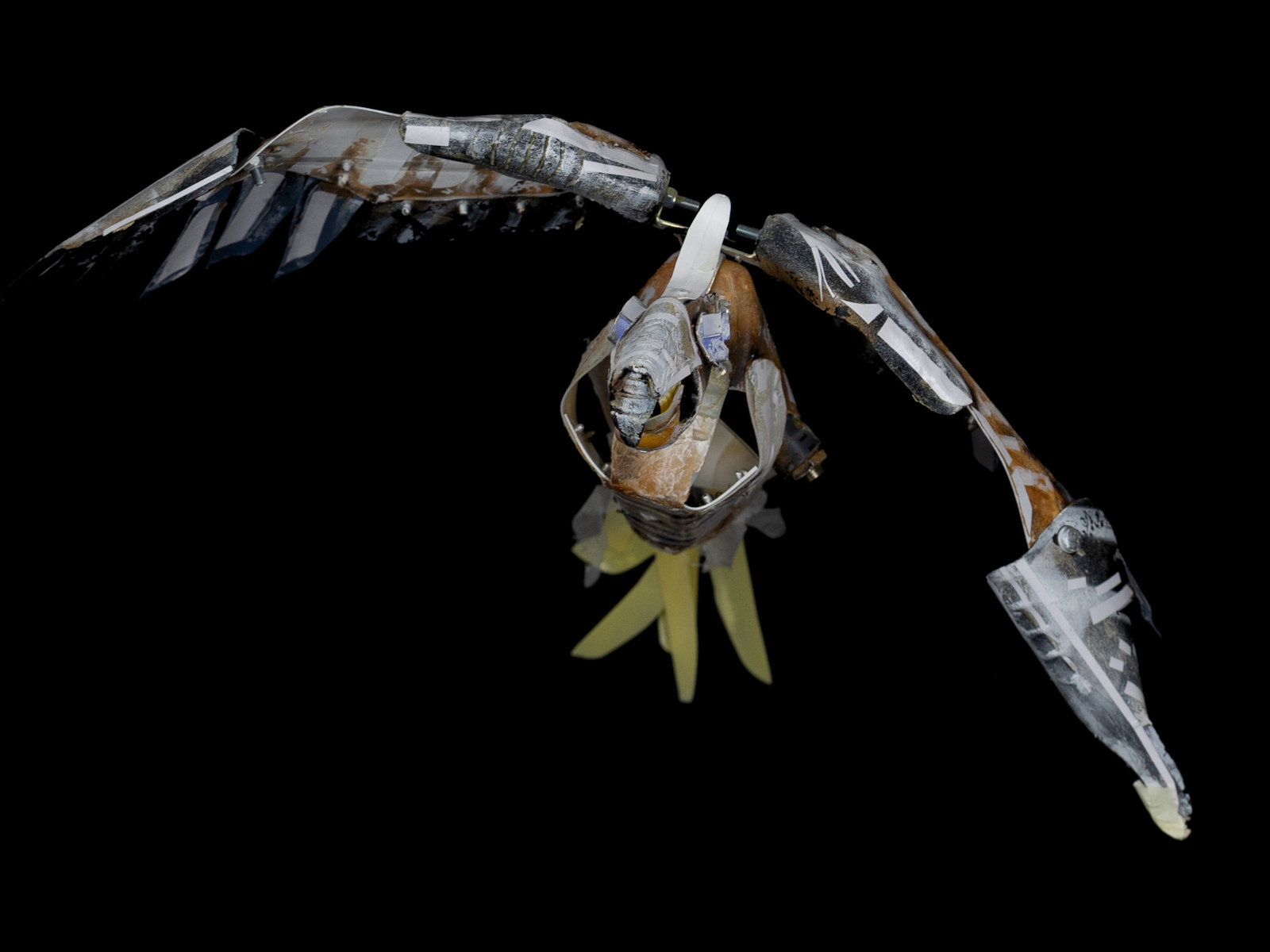
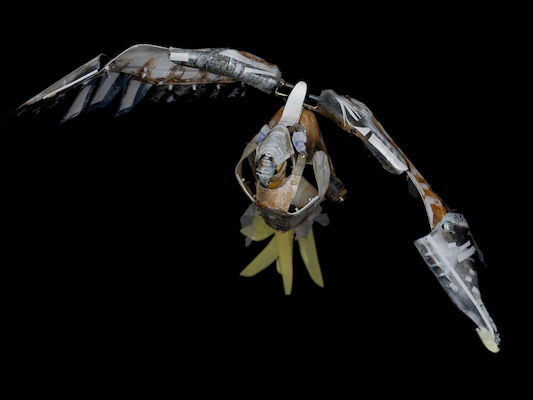
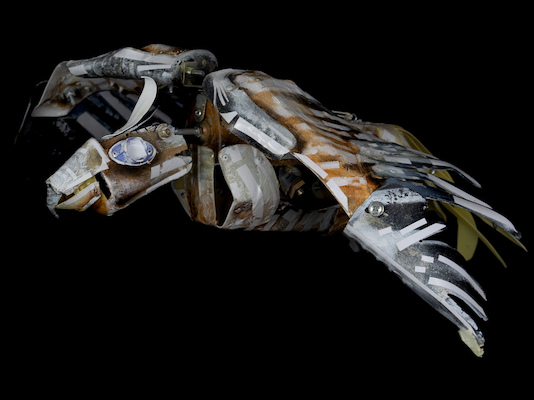
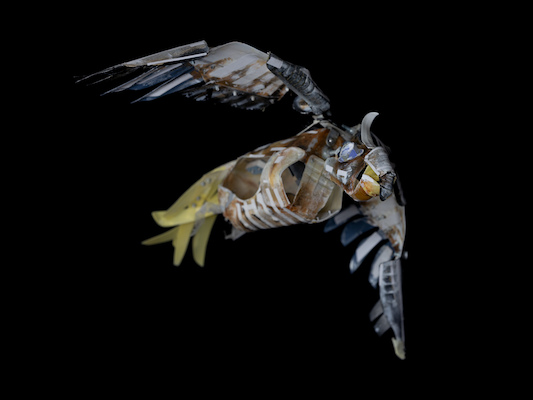

- OBJECT_HEIGHT : 190 mm ( 0'7" in )
- OBJECT_WIDTH : 320 mm ( 1'0" in )
- OBJECT_LENGTH : 660 mm ( 2'1" in )
- OBJECT_WEIGHT : 700 g ( 1.54 lb )
OBJECT_MATERIAL_EN :
body/volume | plastic packagingdetails | paper coating
painting | acrylic paint, UV paint
joints | iron fittings
OBJECT_ARTISTS_EN :
- direction | Clara Ribeiro
- art direction | enVide neFelibata
- creation | enVide neFelibata
OBJECT_DESCRIPTION_EN :
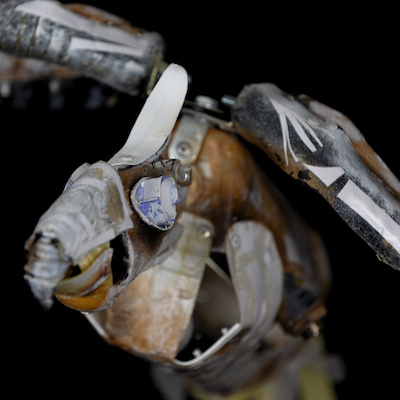
This character has significant symbolism, being inspired by the last golden eagle to be sighted in the Peneda-Gerês region, which makes it a powerful figure in the narrative.
The puppet can be manipulated with or without a rod. This dual functionality adds depth to the show and enhances the puppeteer's storytelling abilities. The choice between the two manipulation methods depends on the specific scenes in the show, allowing for a dynamic and engaging interaction with the audience. The use of a rod, which is placed on its side, is particularly effective for representing the majestic flight of the eagle.
The puppet's volumes, are made from plastic packaging, and have a dual purpose. Firstly, it aligns with the theme of environmental conservation through the reuse of waste materials, thus promoting sustainability. Secondly, it challenges the public's perception of the eagle's natural form, inviting reflection on the human impact on wildlife and its ‘habitats’.
The puppet's movements are structured to imitate the real movement of the animal, and the wings and head have a mechanism that, depending on the inclination, adapt to suggest flight and gliding and thus achieve a high degree of realism.
Through a careful selection of materials, intricate design and manipulation techniques, the puppet manages to create a realistic and emotionally resonant representation of a creature that has become a symbol of conservation efforts in the Peneda-Gerês region.
DOWNLOAD :
CONDITION REPORT 1 MBIMAGERY ARCHIVE 9.8 MB
MODULAE 34.4 KB