
archive-object-reference
REFERENCE : MTM.2023.0287.0402
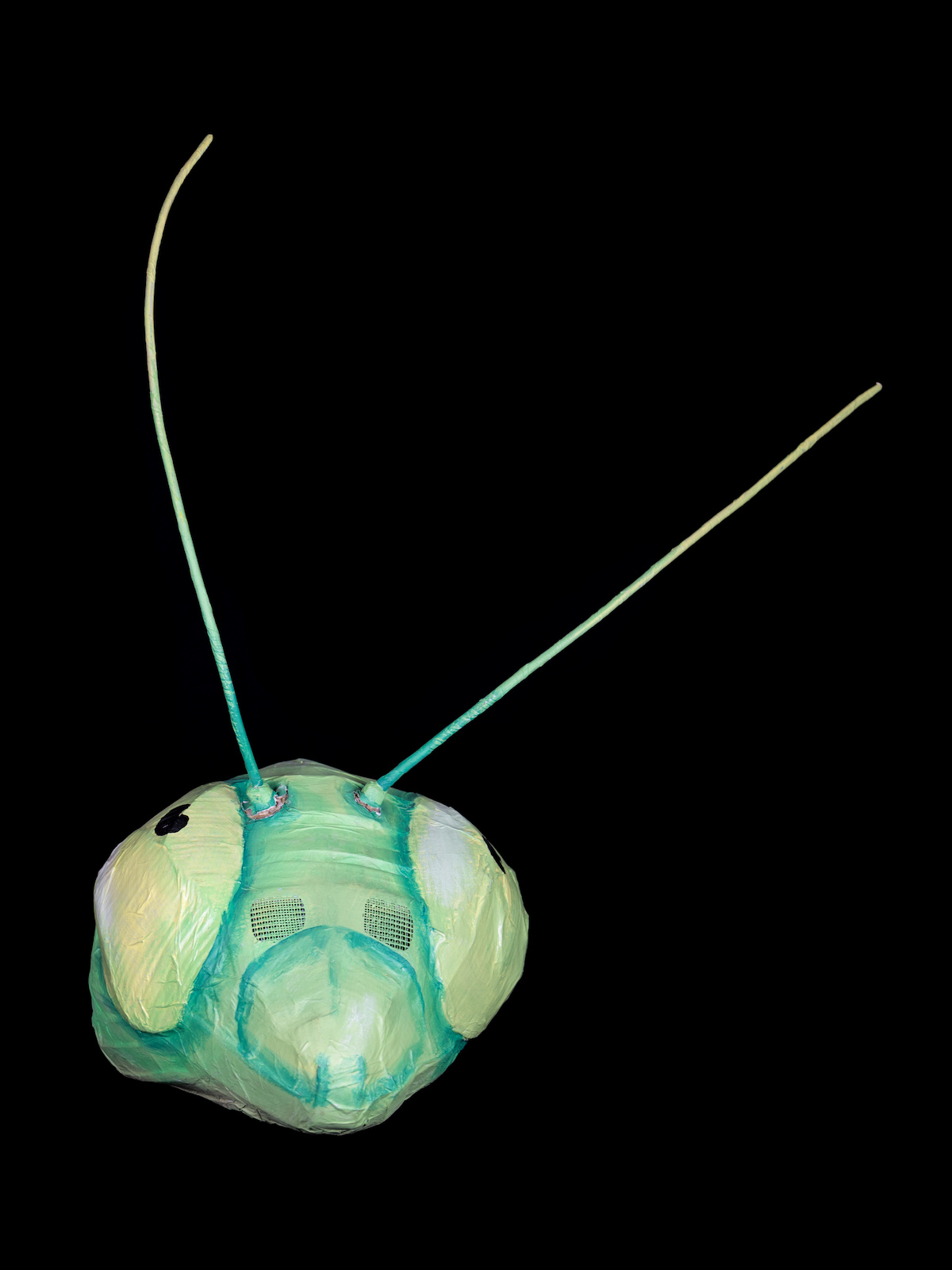
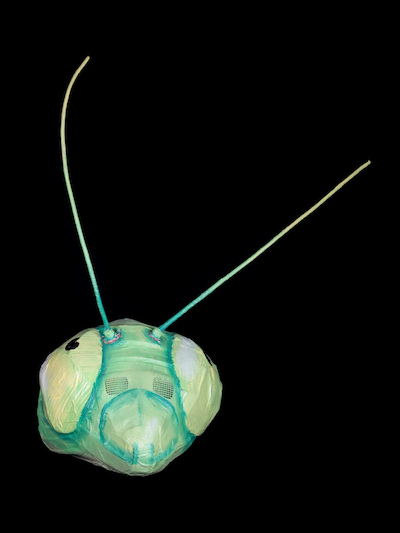
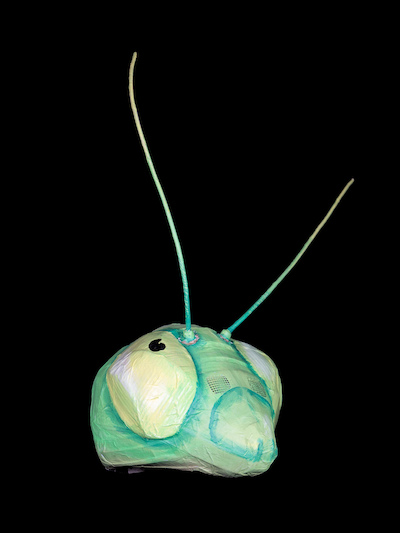
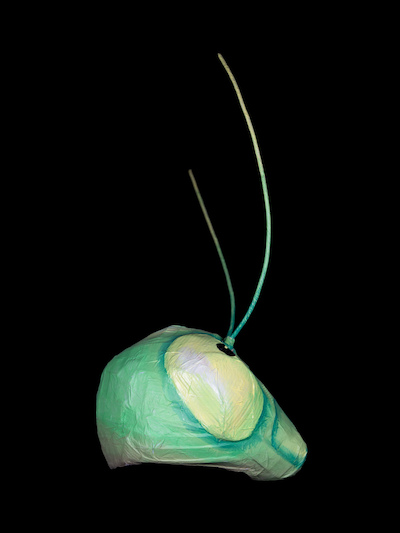
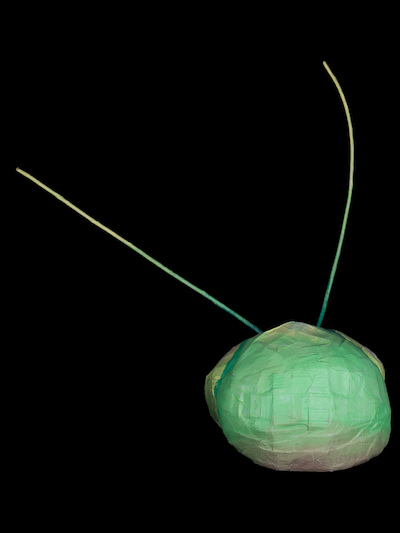
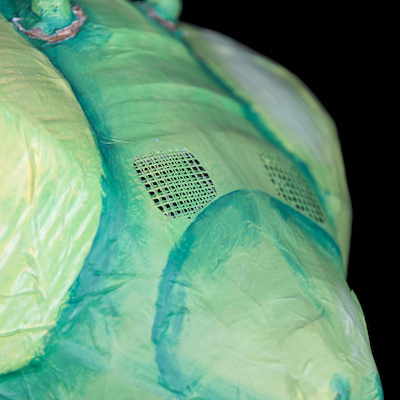
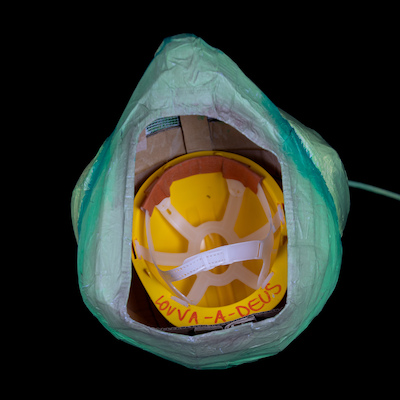

- OBJECT_HEIGHT : 860 mm ( 2'9" in )
- OBJECT_WIDTH : 780 mm ( 2'6" in )
- OBJECT_LENGTH : 410 mm ( 1'4" in )
- OBJECT_WEIGHT : 970 g ( 2.14 lb )
- OBJECT_REF : MTM.2023.0287.0402
- OBJECT_NAME_EN : Praying Mantis
- EVENT_NAME_EN : Cocoon Project
- OBJECT_TYPOLOGY_EN : mask
- OBJECT_DATE : 2023
- OBJECT_STORAGE_REF :
OBJECT_MATERIAL_EN :
body/volume | corrugated cardboard, metal meshdetails | plastic mesh visor
paint | acrylic paint
OBJECT_ARTISTS_EN :
- direction | Clara Ribeiro
- art direction | Migvel Tepes
- creation | Migvel Tepes
OBJECT_DESCRIPTION_EN :
This mask represents a creature known for its dramatic and intimidating appearance.
The construction of the mask involves using a paper-covered cardboard base to create the desired features, exaggerated for the desired theatrical impact, particularly suitable for outdoor shows.
The Mantis character was a human who wanted to be a martial arts fighter. When he transforms, he appears as Mantis, an animal that is an expert fighter in the world of insects, known for their predatory behavior and unique method of hunting. This metaphorical transformation suggests a change in the character's identity.
The interaction between the mask and the actor's body is crucial to achieving the realistic quality of the creature. Based on the principles of physical theater and performance art, the actor's movements must be deliberate and exaggerated in order to animate the mask effectively. This approach underlines the non-verbal communication aspect of the show, as the character's personality and intentions are conveyed primarily through body language and physicality.
The use of additional body extensions, such as insect-like legs, further blurs the line between human and insect. This integration emphasizes the theme of metamorphosis, challenging the audience's perception of what is human and what is not.
The effectiveness of this mask in a performance context depends heavily on the actor's ability to embody the essence of the creature and manipulate the mask in a way that appears realistic. This requires an in-depth knowledge of the insect's movement patterns and behavior, resulting in a captivating and thought-provoking theatrical experience.
OBJECT_CONTEXT_EN :
This project was inspired by Franz Kafka's “Metamorphosis”, which explores deep themes of the human condition, desire, and fear through the transformation of the protagonist, Gregor Samsa, into a giant insect.
This was a community project developed with a group of young people, who were led to reflect on the human condition, their desires, and fears. Seven insect characters were created, and each insect represents a different aspect of the human condition, in a metaphor for the various internal and external struggles experienced by individuals in society.
DOWNLOAD :
CONDITION REPORT 1.4 MBIMAGERY ARCHIVE 22 MB
MODULAE 75.8 KB