
archive-object-reference
REFERENCE : MTM.2024.0293.0381
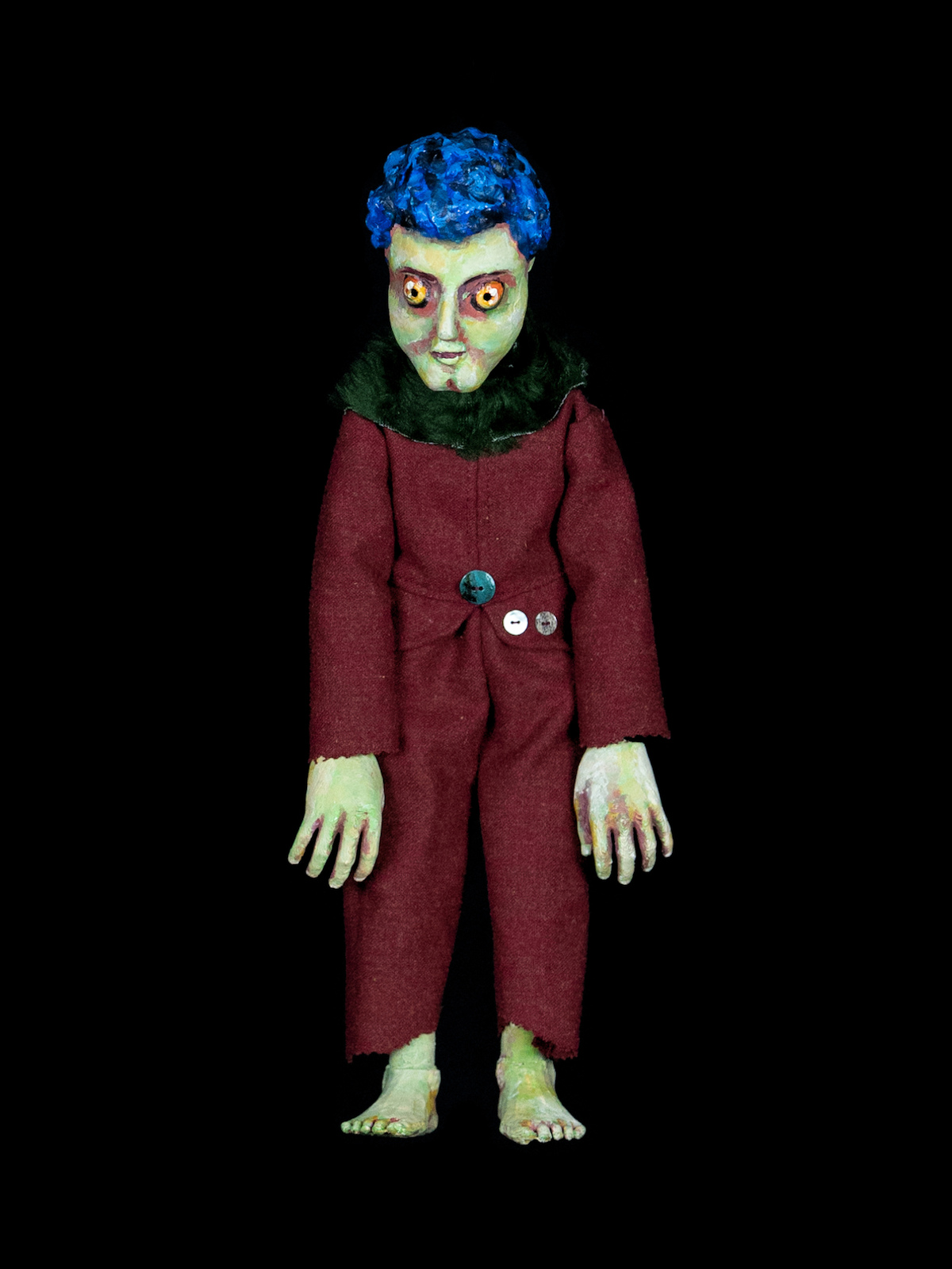
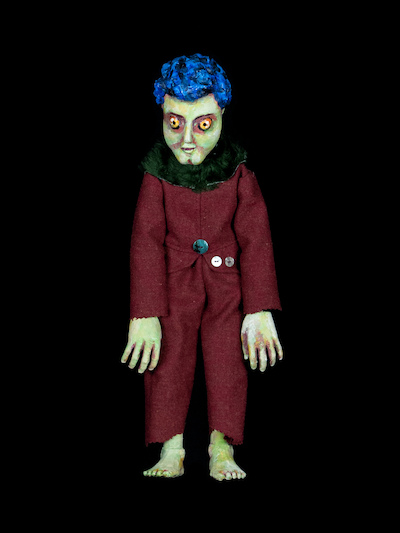
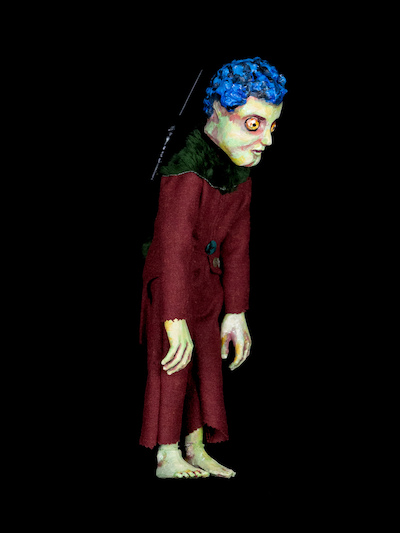
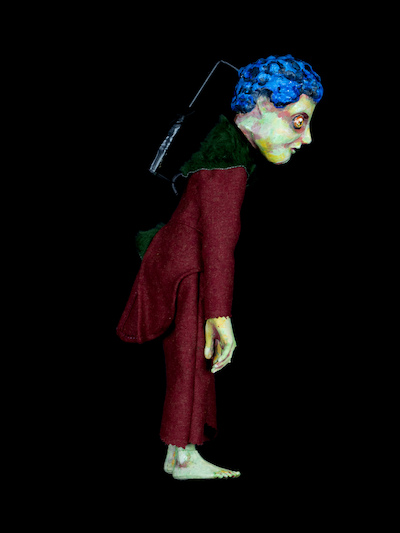
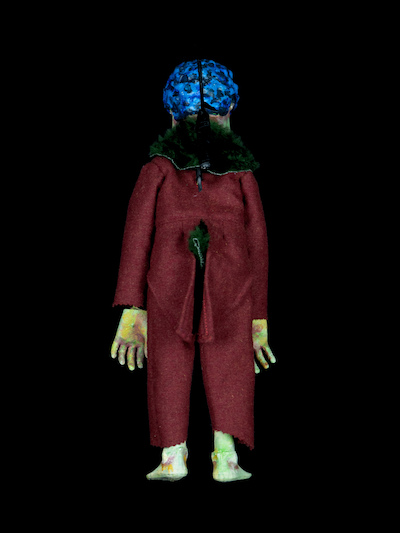
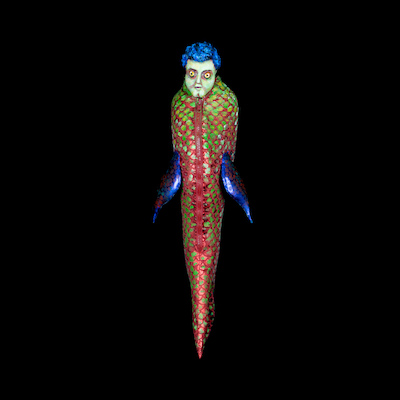
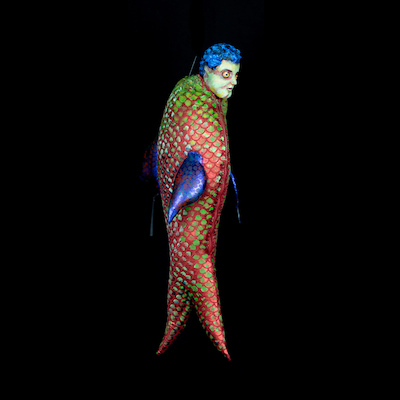
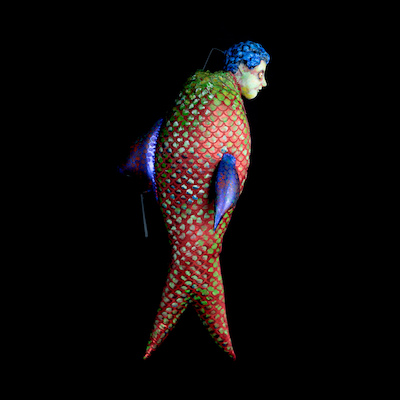
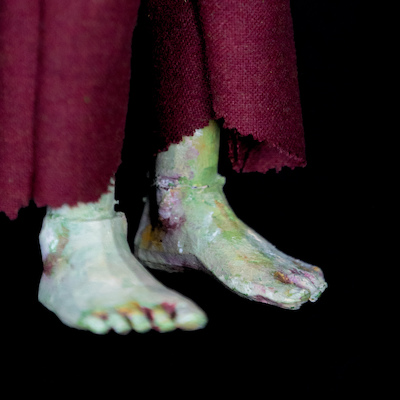
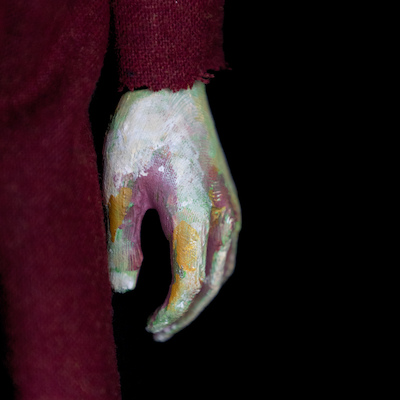

- OBJECT_HEIGHT : 430 mm ( 1'4" in )
- OBJECT_WIDTH : 170 mm ( 0'6" in )
- OBJECT_LENGTH : 160 mm ( 0'6" in )
- OBJECT_WEIGHT : 550 g ( 1.21 lb )
- OBJECT_REF : MTM.2024.0293.0381
- OBJECT_NAME_EN : Fish King
- EVENT_NAME_EN : stories from the land
- OBJECT_TYPOLOGY_EN : puppet / mixed technique / mixed technique
- OBJECT_DATE : 2024
- OBJECT_STORAGE_REF :
OBJECT_MATERIAL_EN :
skeleton | polylactic acid, woodhead | polylactic acid, paper dough
hands | polylactic acid
painting | acrylic paint
costume | various fabrics
joints | polylactic acid
OBJECT_ARTISTS_EN :
- direction | Filipa Mesquita
- art direction | Marta Fernandes da Silva
- creation | Marta Fernandes da Silva
- built | enVide neFelibata, Marta Fernandes da Silva
- costume | Beatriz Filomeno
OBJECT_DESCRIPTION_EN :
In this story, several characters are part of a repetitive sequence, a frequent feature in traditional Portuguese stories. It's important to differentiate the quality of movement, but to create a uniformity in the way the puppets are manipulated together.
The puppet, having the characteristics of a table-top puppet, where its features are divided between the human quality and the quality of a fish, ends up being manipulated in space in a kind of dive or flight. This allows us to understand the connection between water, air, and earth. The puppet has a manipulation rod, and the hands and feet are manipulated directly by the actress. The head support allows the puppet to be suspended in the scenic space at times.
There were three creatives involved in the making of this puppet: first the creation of the internal structure using 3D printing, then the modeling and painting, and finally the execution of the costume. The tones were articulated so that the figure was visually uniform.
DOWNLOAD :
CONDITION REPORT 2.3 MBIMAGERY ARCHIVE 22.4 MB
MODULAE 45.3 KB